Launch offer — valid today only

📄 Digital book in PDF · read it on your phone or print it

Dry Pipe, Preaction and Deluge Valves in Drawings Reset Them in the Same Order Every Time

The clapper, the differential, the accelerator, single and double interlock, the trip test, the reset and the false trip. Every topic gets its own page: the drawing first, then what you need to remember. 66 illustrated pages.

I WANT EVERY VALVE DRAWN

🔒 Secure checkout · PDF by email · 30-day guarantee

Every topic, its own pageEvery valve and every procedure drawn, with the explanation beside it
66 illustrated pages8 parts, from wet vs. dry to the final field review
Up-to-date sourcesNFPA 25, NFPA 13 and each valve maker's instructions
PDF by emailFormat

Look Inside the Book

Every page has one big drawing and a box with the steps and psi checks you need to know:

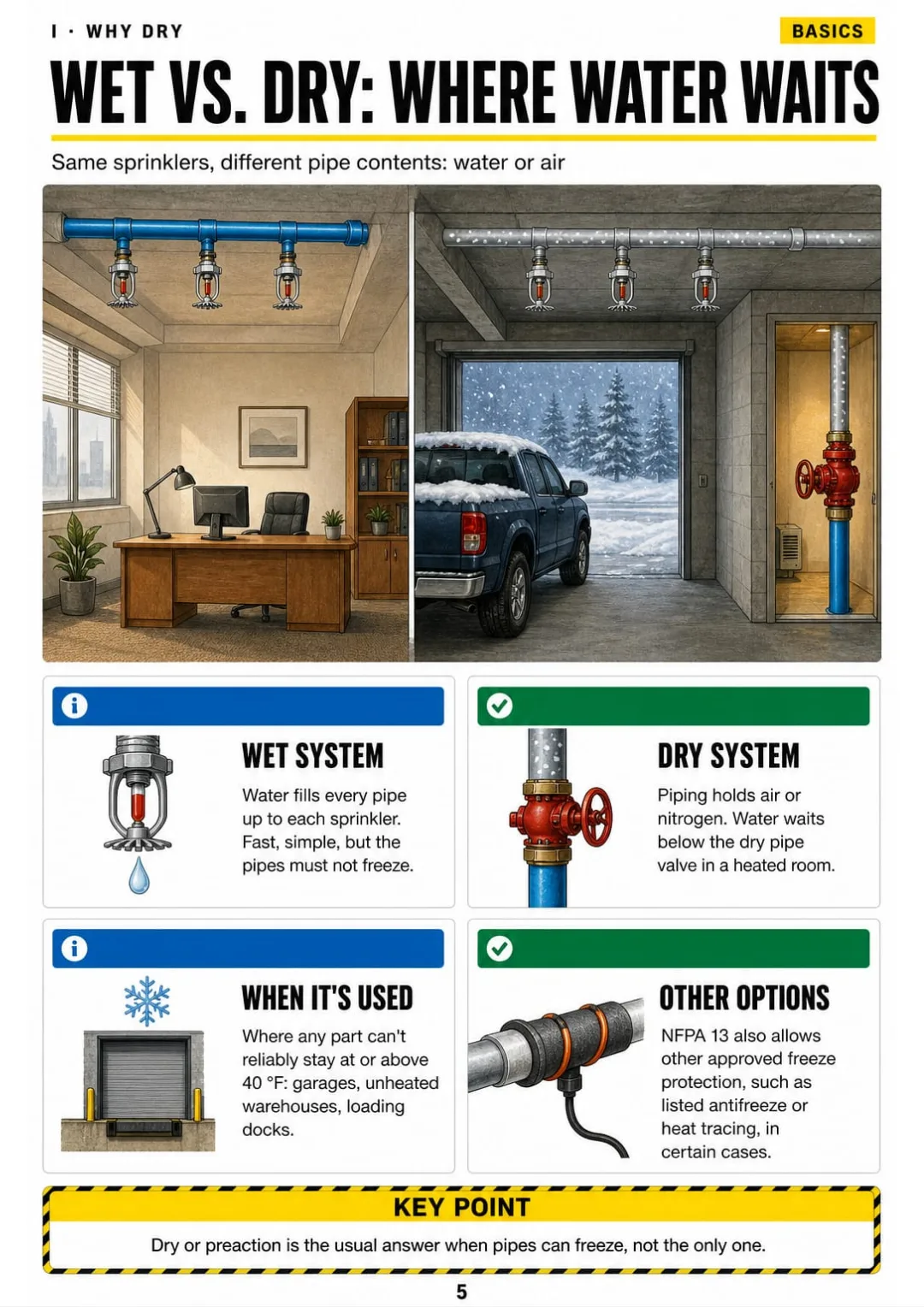
Wet keeps water at every sprinkler; dry keeps air in the pipe where it can't stay at or above 40 °F.
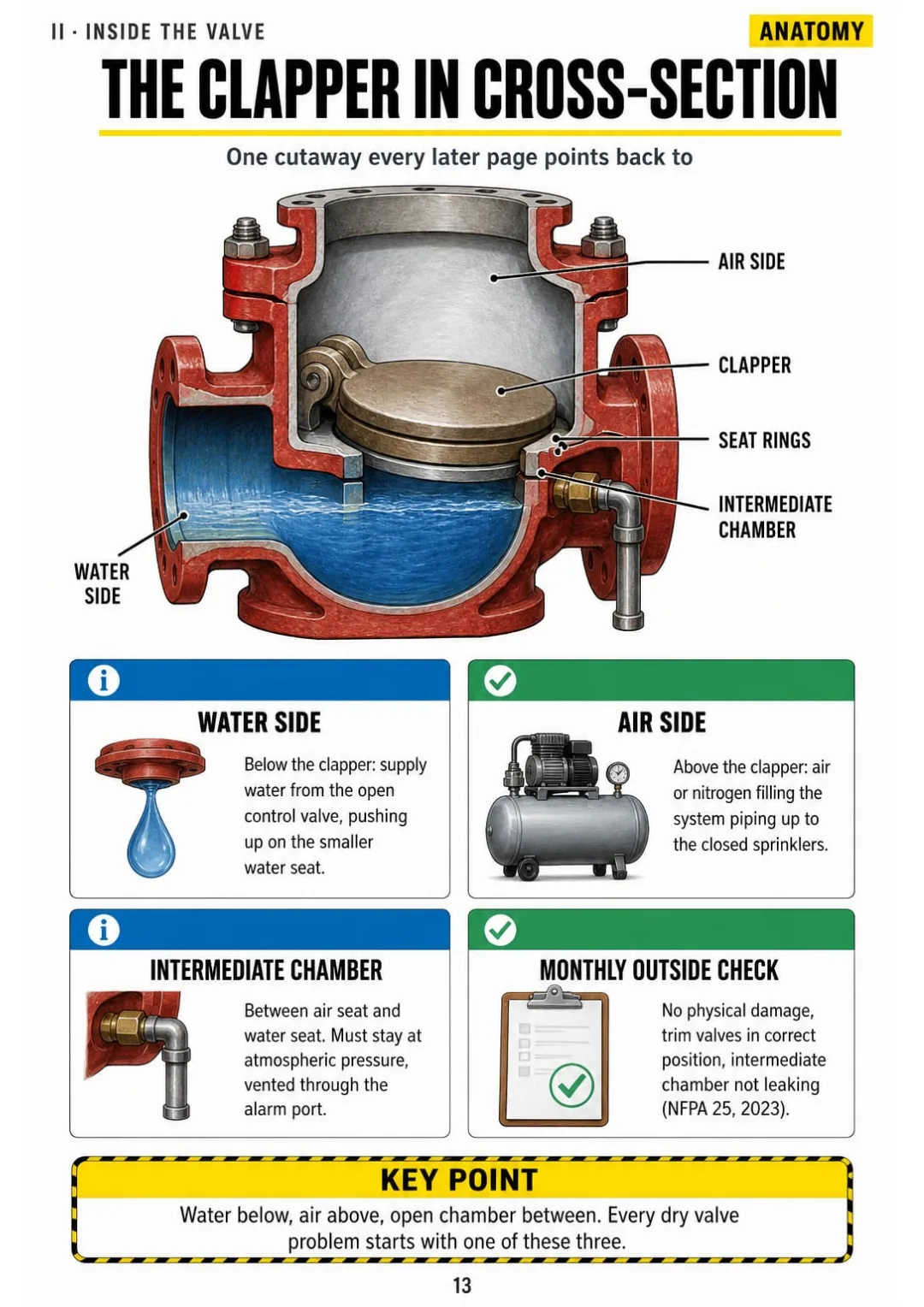
Dry pipe valve cutaway: water side, air side, clapper, seat rings and intermediate chamber
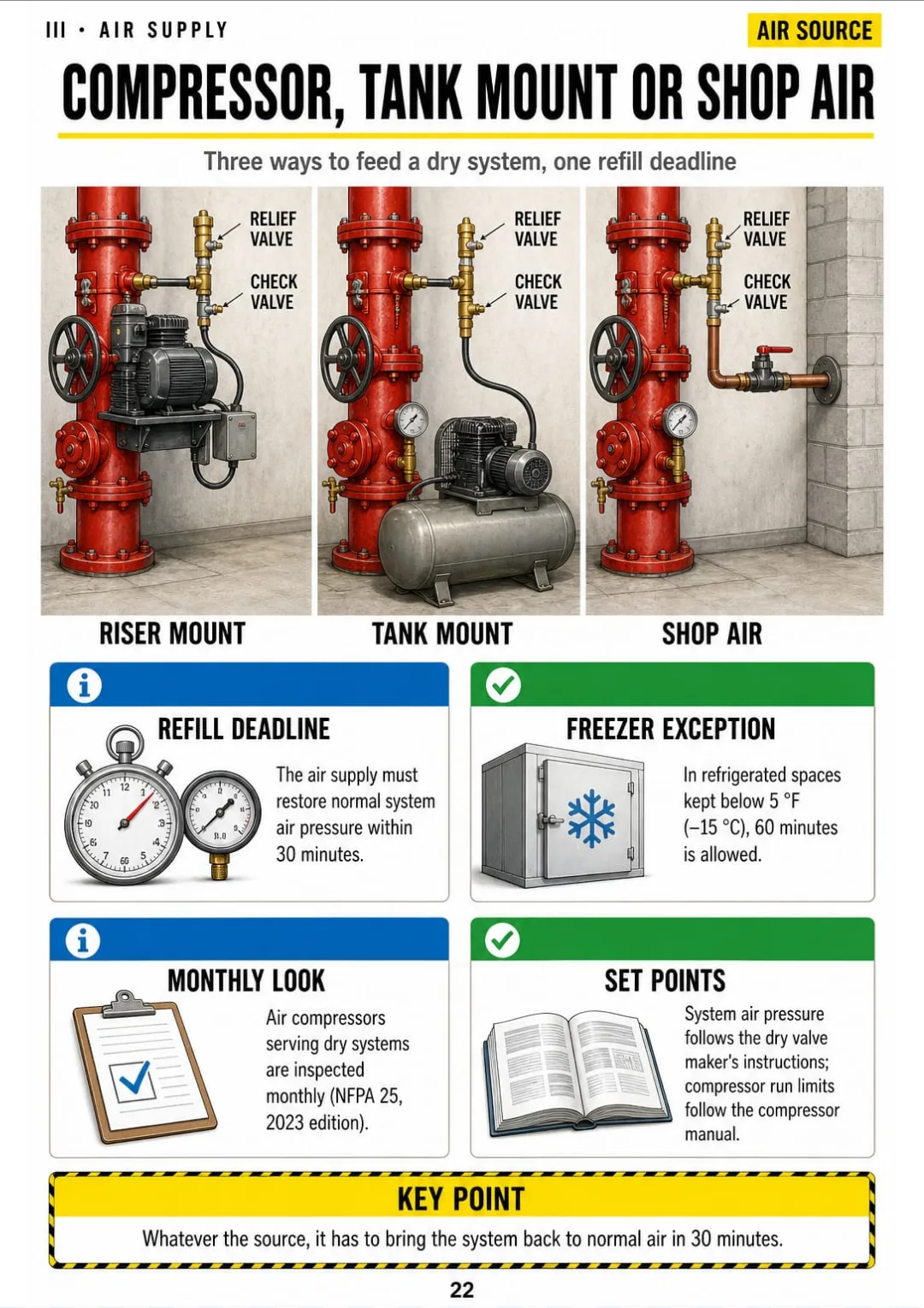
Riser mount, tank mount or shop air: all must restore normal air within 30 minutes.
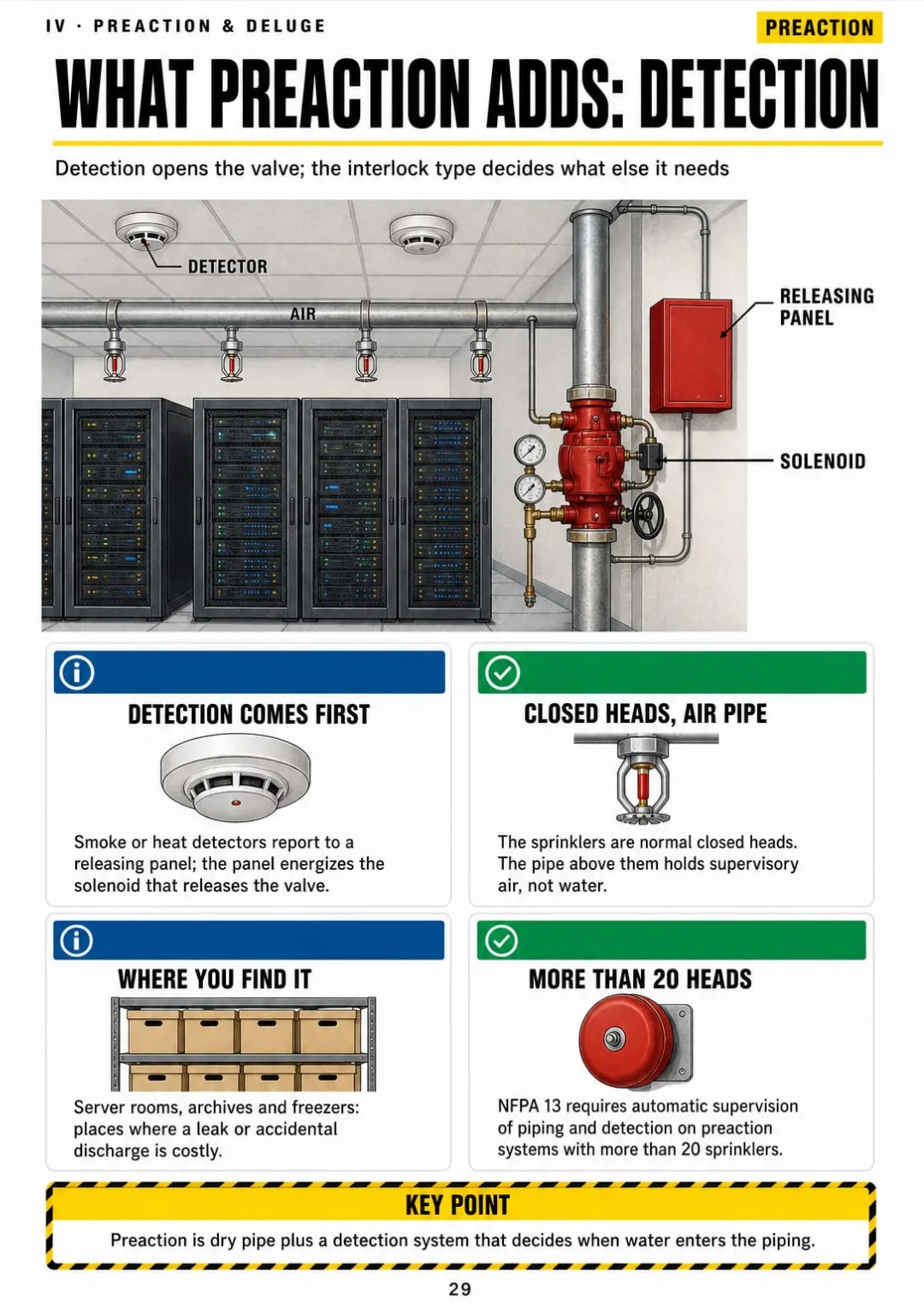
Detector, releasing panel, solenoid and closed heads on air: preaction in one drawing.
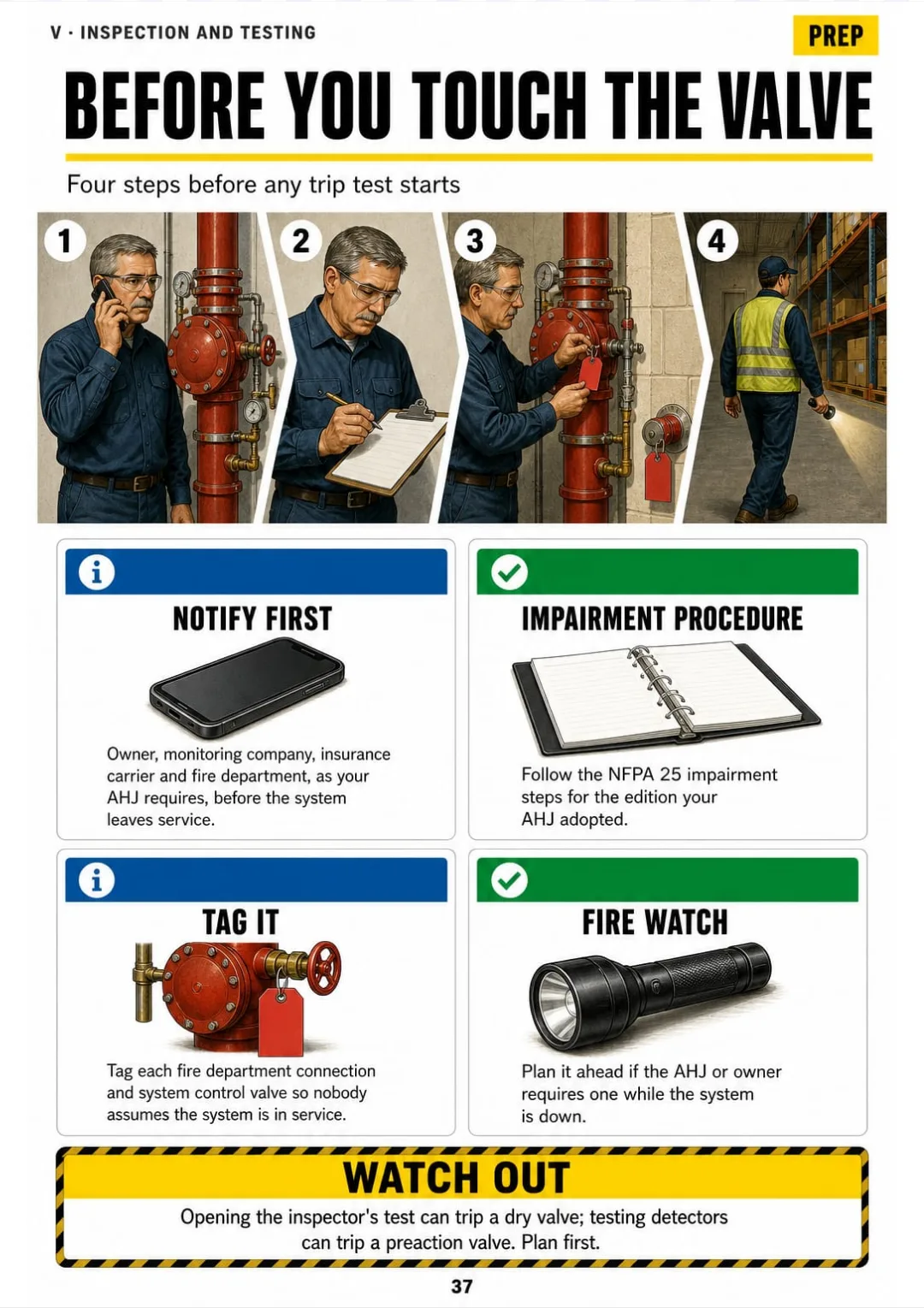
4 steps before the test: notify, impairment procedure, tags, fire watch
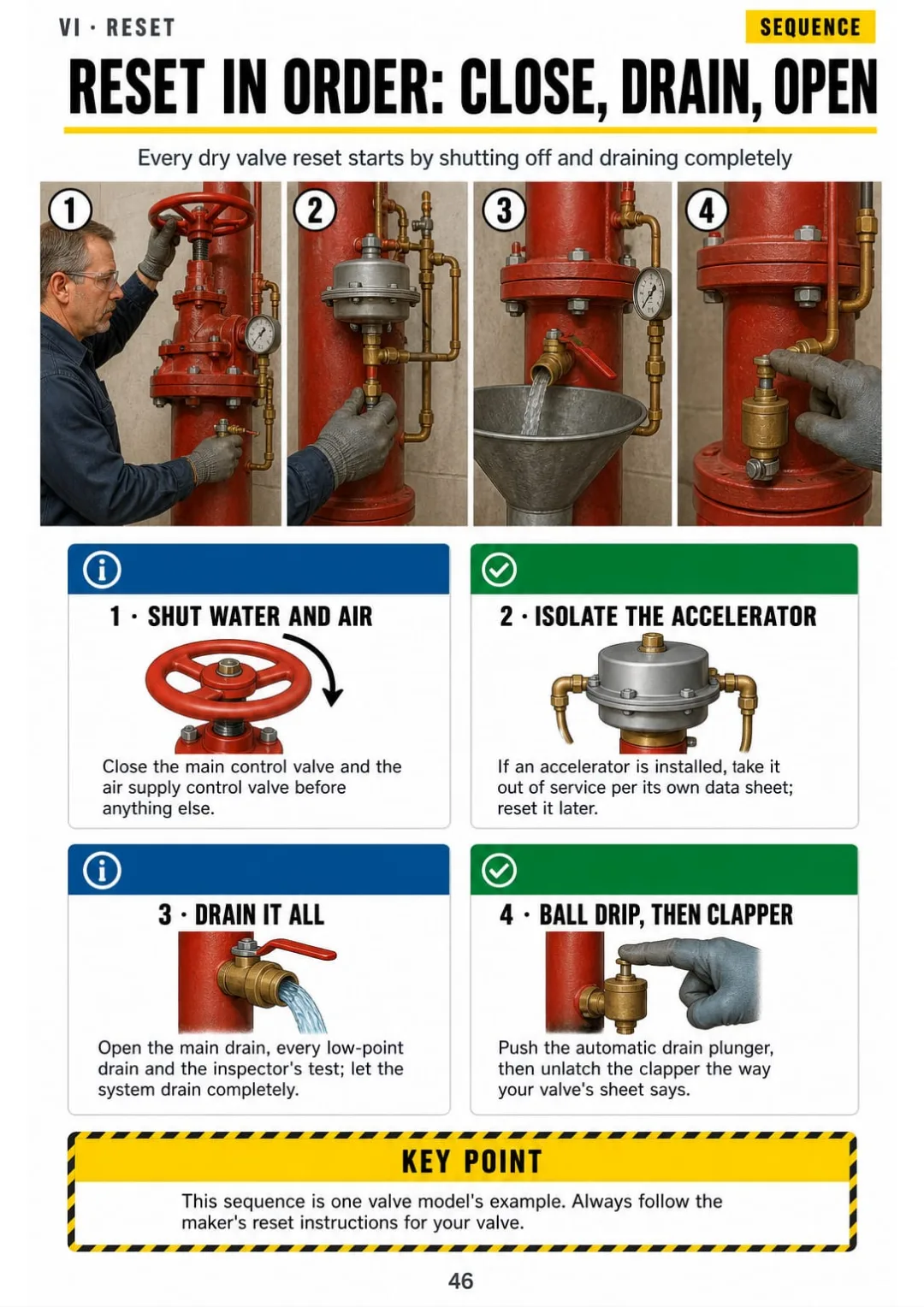
Close water and air, reset the accelerator, drain completely, push the ball drip, unlatch the clapper.
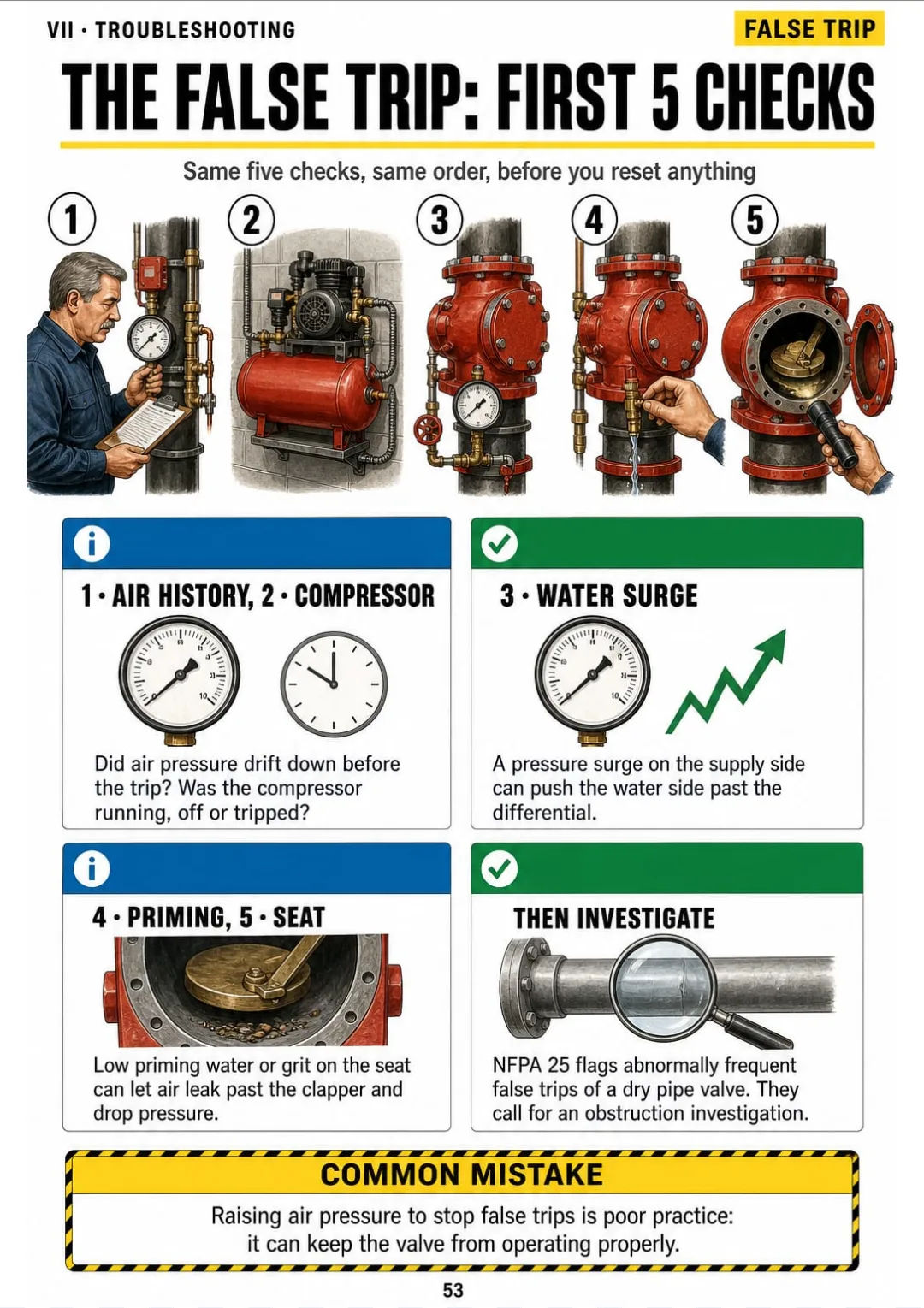
False trip: air history, compressor, water surge, priming water, seat debris — then reset.
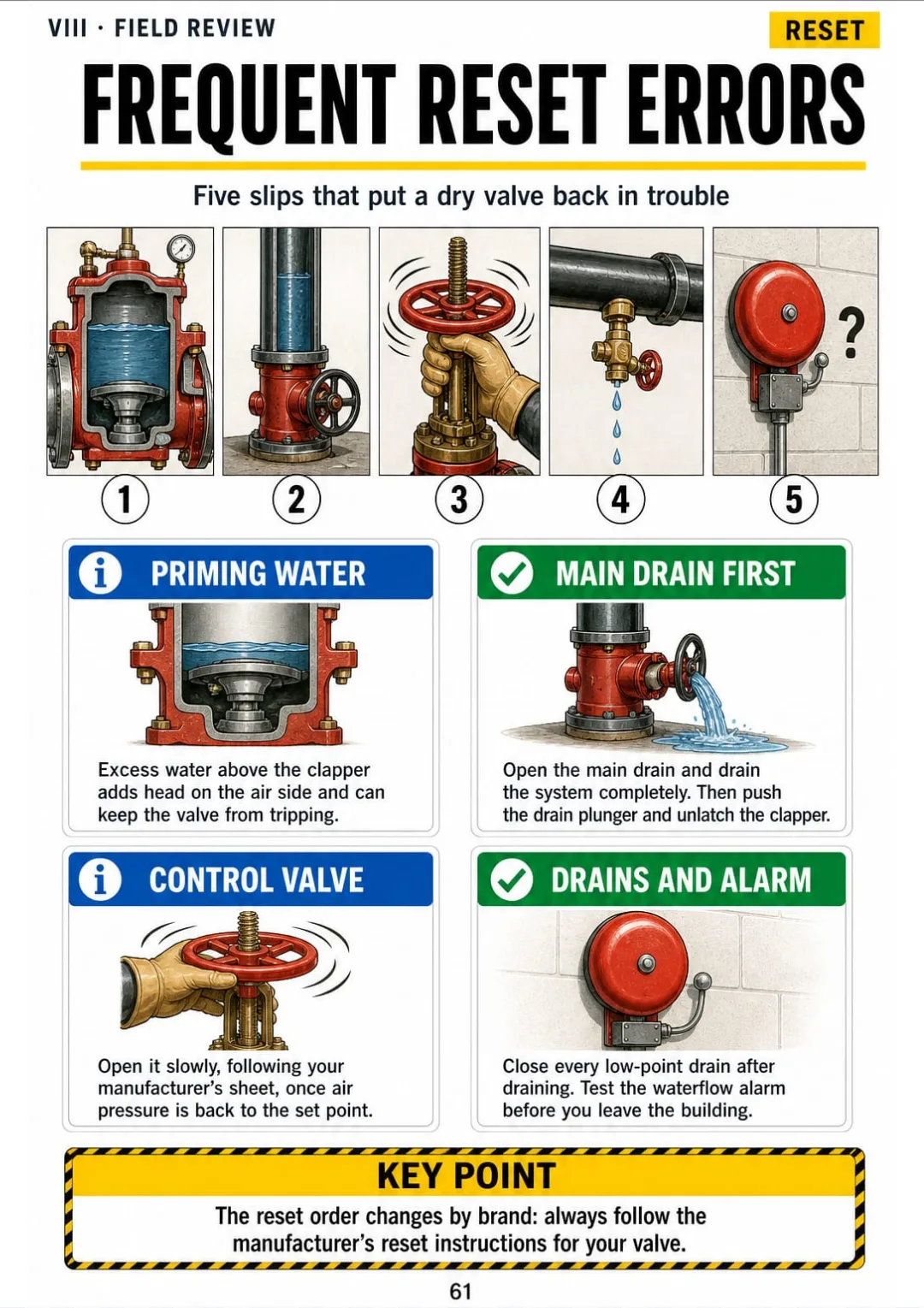
Too much priming water, a closed main drain, an open low point: 5 reset errors, drawn

Swipe to see more →

These are real pages from the book. The table of contents is the full one: 8 parts and 62 topics.

The Problem Isn't You. It's How It Was Explained to You.

You're in the valve room, the low air alarm is on and the compressor keeps cycling. You need to know if this air supply can get the system back to normal pressure in time.

The manual covers it in paragraphs: riser mount, tank mount, shop air, regulators, fill rates. In a wet binder, under a flashlight, the pieces never connect.

Riser mount, tank mount or shop air: all must restore normal air within 30 minutes.

In the book, that topic is one page. Riser mount, tank mount and shop air are drawn side by side, each with its line to the valve, and the 30-minute restore rule sits in a box, marked to check against the NFPA 13 edition your AHJ has adopted.

The air maintenance device, the low air alarm, the accelerator, the exhauster and the reset sequence each get their own page too.

You see how the air gets to the clapper, and you troubleshoot it without going back to the manual.

COMPARE FOR YOURSELF

Same Topic, Two Ways to Learn It

THIS
  • The manual: line after line of text
  • Clappers and differentials explained only in words
  • You get to the valve still unsure
The dry pipe valve consists of a body divided by a hinged clapper assembly into an inlet chamber, connected to the water supply, and an outlet chamber, connected to the system piping and maintained under pneumatic pressure. The clapper seats against concentric water and air seat rings, between which an intermediate chamber, vented to atmosphere through the alarm outlet and an automatic ball drip, is maintained at atmospheric pressure while the valve remains in the set position.
FOR THIS
  • The clapper in one cutaway drawing
  • The steps and psi checks in a box
  • You see it and you get it
Dry pipe valve cutaway: water side, air side, clapper, seat rings and intermediate chamber
CONTENTS

Take a Look at the 8 Parts and 62 Topics

Why a system goes dry, inside the dry pipe valve, air supply and quick-opening devices, preaction and deluge, inspection and trip testing, reset, troubleshooting calls and field review: 66 pages, all illustrated

IWhy a System Runs Dry · pp. 5-12
  1. Wet vs. Dry: Where Water Waits
  2. Dry, Preaction, Deluge: One Page, Three Valves
  3. The Riser From Bottom to Top
  4. The Valve Room Must Stay Above 40 °F
  5. Pitch: Why Dry Pipe Is Sloped
  6. Trapped Sections and Drum Drips
  7. Water Delivery Time in One Picture
  8. Words the Field Uses
IIInside the Dry Pipe Valve · pp. 13-21
  1. The Clapper in Cross-Section
  2. The Differential, Step by Step
  3. Finding the Trip Point
  4. Low-Differential and Mechanical Latch Valves
  5. Priming Water: Why It Sits on the Clapper
  6. The Intermediate Chamber and Ball Drip
  7. After the Trip: Clapper Latched Open
  8. Alarm Line and Pressure Switch
  9. Brands Look Different, Physics Is the Same
IIIAir Supply and Quick-Opening Devices · pp. 22-28
  1. Compressor, Tank Mount or Shop Air
  2. The Air Maintenance Device
  3. Nitrogen and Dry Air Against Corrosion
  4. Low Air Alarm: The Early Warning
  5. The Accelerator, Drawn Open
  6. The Exhauster
  7. When a Quick-Opening Device Is Required
IVPreaction and Deluge · pp. 29-36
  1. What Preaction Adds: Detection
  2. Non-Interlock Preaction
  3. Single Interlock
  4. Double Interlock
  5. Supervisory Air on Preaction
  6. Inside the Deluge Valve
  7. Release Trims: Electric, Wet Pilot, Dry Pilot
  8. Manual Pull Station and Emergency Release
VInspection and Trip Testing · pp. 37-45
  1. Before You Touch the Valve
  2. The Gauge Walk
  3. The Main Drain Test
  4. Partial Flow Trip Test
  5. Full Flow Trip Test
  6. What Goes on the Trip Test Record
  7. Testing the Quick-Opening Device
  8. Preaction Trip Test
  9. Deluge Test Without Flooding the Area
VIReset and Return to Service · pp. 46-52
  1. Reset in Order: Close, Drain, Open
  2. Inspect the Seats and the Clapper
  3. Reset the Clapper and the Latch
  4. Prime, Then Pressurize
  5. Open the Water Slowly
  6. Reset a Preaction or Deluge Valve
  7. Back in Service: Final Checks
VIITroubleshooting Calls · pp. 53-60
  1. The False Trip: First 5 Checks
  2. Water Columning
  3. Slow Air Loss
  4. Compressor Runs Too Often or Won't Stop
  5. Water at the Ball Drip
  6. Slow Trip or Long Water Delivery
  7. Ice in the Line
  8. Preaction That Won't Open or Opens on Its Own
VIIIField Review · pp. 61-66
  1. Frequent Reset Errors
  2. Frequent Trip Test Errors
  3. Inspection Frequencies at a Glance
  4. Before the First Freeze
  5. The Reset on One Page
  6. Dry, Preaction, Deluge: Final Review

One Page, One Topic, All Clear

Think of it this way:

A full flow trip test on a dry system in a warehouse. The water came through, the test is logged, and now the valve has to go back in service, in the right order, with the manager asking when.

You open to the page “Reset in Order: Close, Drain, Open.” Every step is numbered and drawn: water and air closed, the accelerator reset, the system drained, the ball drip pushed, the clapper unlatched.

4 steps before the test: notify, impairment procedure, tags, fire watch

Same with the false trip, water columning, the double interlock preaction, the deluge test and the drains before the first freeze: each one on its own page.

Dry Pipe & Preaction Valves Illustrated is 8 parts and 62 topics, all drawn, and it closes with the frequent reset and trip test errors and the whole reset on one page.

What you see drawn, you don't have to memorize.

What's Inside Dry Pipe & Preaction Valves Illustrated:

Ipp. 5-12

Why a System Runs Dry

Wet vs. dry, the three valves side by side, the riser, the 40 °F valve room, pitch, drum drips, water delivery time and the words the field uses.

IIpp. 13-21

Inside the Dry Pipe Valve

The clapper in cross-section, the differential step by step, the trip point, low-differential and latch valves, priming water, the intermediate chamber, the ball drip and the alarm line.

IIIpp. 22-28

Air Supply and Quick-Opening Devices

Compressor, tank mount or shop air, the air maintenance device, nitrogen, the low air alarm, the accelerator, the exhauster and when a quick-opening device is required.

IVpp. 29-36

Preaction and Deluge

What detection adds, non-interlock, single and double interlock, supervisory air, the deluge valve, release trims and the manual release.

Vpp. 37-45

Inspection and Trip Testing

What to do before you touch the valve, the gauge walk, the main drain test, partial and full flow trips, the test record, preaction and deluge tests.

VIpp. 46-52

Reset and Return to Service

The reset in order: close, drain, open; seats and clapper, the latch, priming, pressurizing, opening the water slowly and the final checks.

VIIpp. 53-60

Troubleshooting Calls

The false trip, water columning, slow air loss, a compressor that won't stop, water at the ball drip, slow trips, ice in the line and preaction that misbehaves.

VIIIpp. 61-66

Field Review

Frequent reset and trip test errors, inspection frequencies at a glance, the pre-freeze walk, the reset on one page and a final review.

At the end of the book: A field review section: frequent reset and trip test errors, inspection frequencies at a glance and the whole reset on one page.
Plus: 2 Free Books

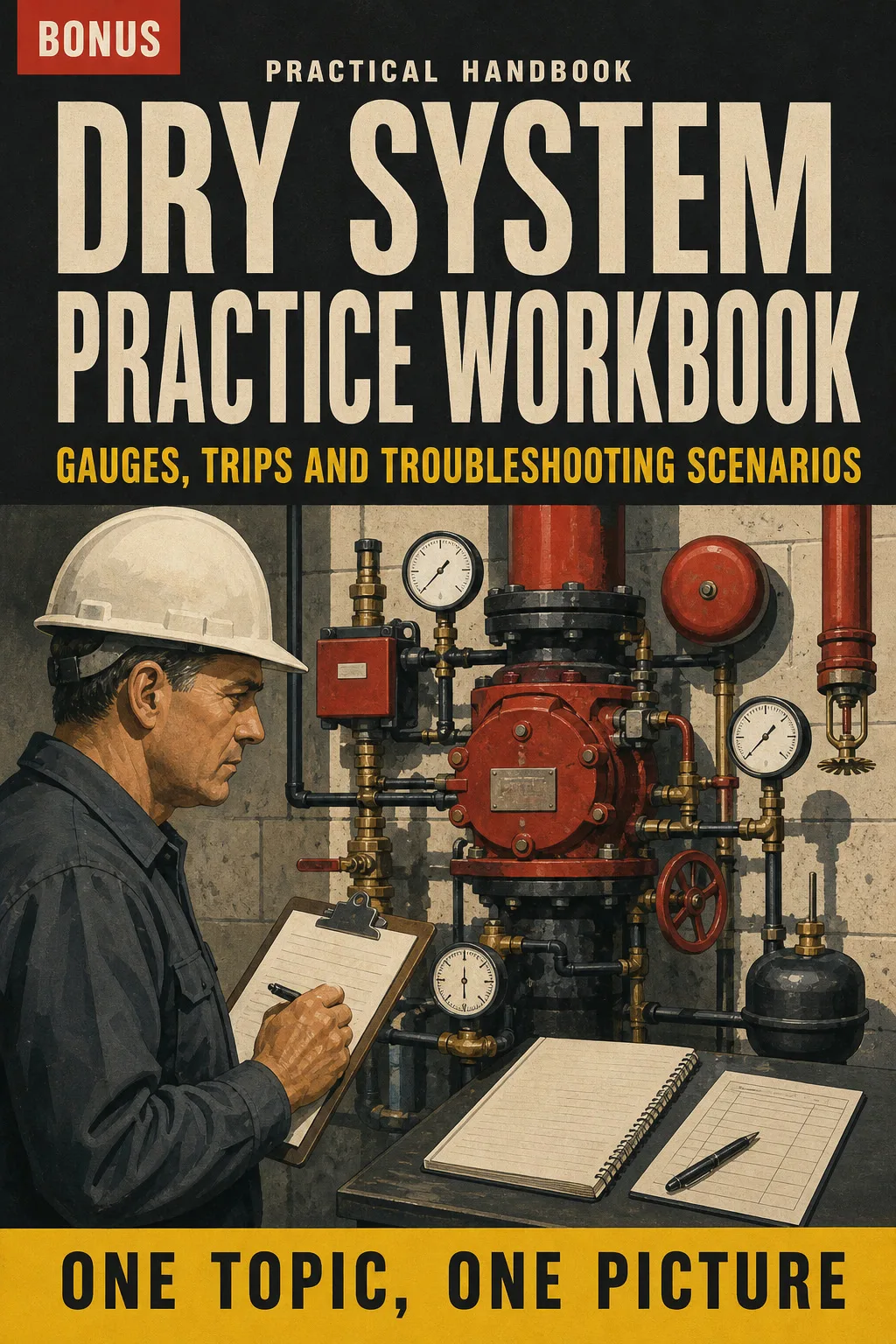
Dry System Practice Workbook: Gauges, Trips and Troubleshooting Scenarios

BONUS 1: «Dry System Practice Workbook: Gauges, Trips and Troubleshooting Scenarios»

Value on its own: US$ 17.90

Practice reading air and water gauges in psi and work through real-world valve room scenarios before you face them on a service call.

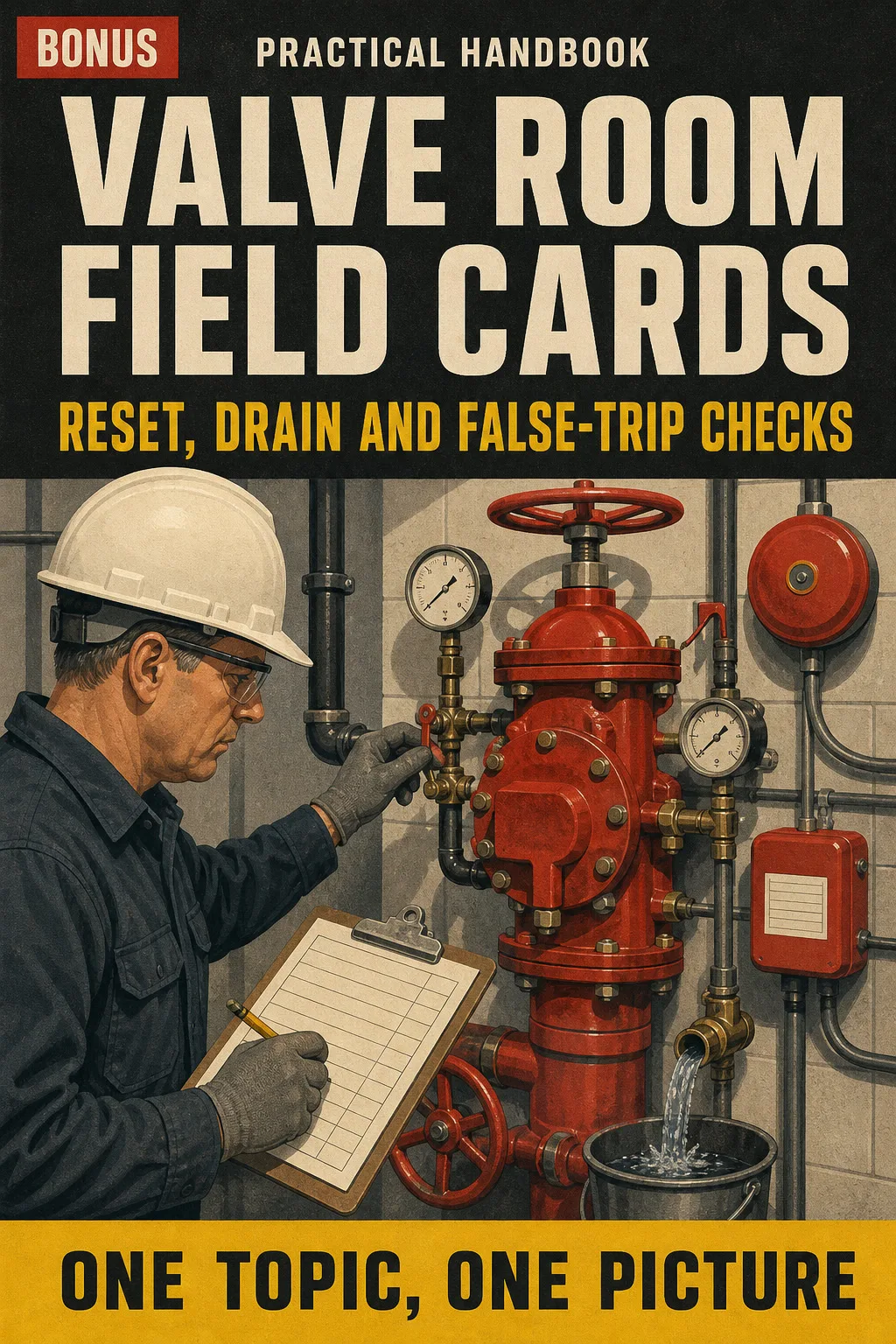
Valve Room Field Cards: Reset, Drain and False-Trip Checks

BONUS 2: «Valve Room Field Cards: Reset, Drain and False-Trip Checks»

Value on its own: US$ 14.90

The reset sequence, the low-point drain walk and the false-trip checks on one card each, so you can print them and keep them in the truck.

Dry Pipe & Preaction Valves Illustrated with 2 Free Books

  • Dry Pipe & Preaction Valves Illustrated: 66 illustrated pagesUS$ 63
  • BONUS 1: Dry System Practice Workbook: Gauges, Trips and Troubleshooting ScenariosUS$ 17.90
  • BONUS 2: Valve Room Field Cards: Reset, Drain and False-Trip ChecksUS$ 14.90
  • High-resolution PDF to printIncluded
Total value US$ 95.80
YOUR PRICE:
US$ 27
You save US$ 68.80
YES, I WANT DRY PIPE & PREACTION VALVES ILLUSTRATED FOR US$ 27

📄 This is a digital PDF book sent to your email: nothing is printed or shipped.

Secure purchaseEncrypted payment30-day guarantee

PDF by email: We email you Dry Pipe & Preaction Valves Illustrated as a PDF, together with the two free books. It's a single payment: no installments, no extra charges.

Who This Book Is For

Moving from install to service

Moving from install to service

You've hung a lot of pipe, but resets are new. Every valve type is drawn side by side, and the reset comes in numbered steps.

Trip test season or first freeze coming

Trip test season or first freeze coming

Before the annual trip test or the first cold snap, you go through the procedure page and the low-point drains, in the same order every time.

Already running trip tests and resets

Already running trip tests and resets

You keep the reset, the false-trip checks and the frequent errors printed in the truck, to check at a glance at the valve.

Everything You Get Today

US$ 95.80US$ 27
YES, I WANT DRY PIPE & PREACTION VALVES ILLUSTRATED FOR US$ 27

📄 This is a digital PDF book sent to your email: nothing is printed or shipped.

30DAYS
GUARANTEE

30-Day Guarantee

Try Dry Pipe & Preaction Valves Illustrated for 30 days, bonus books included.

We refund everything if the file won't open, if the book isn't what you see here, if you were charged twice or if the email doesn't arrive. Just email us.

You pay once. No subscriptions.

Frequently Asked Questions

Is it for me if I already run trip tests and resets?

Yes. It's written for people who already do the work. The valves are drawn generic on purpose and cover the types you meet in the field: differential dry pipe valves, low-differential and latched-clapper valves, non-interlock, single and double interlock preaction, and deluge. Brands look different, but the physics and the order of the reset are the same. For trim layout and brand-specific steps, every procedure points you to the maker's instructions.

Where does the content come from?

From the current edition of NFPA 25 for inspection, testing and maintenance, NFPA 13 for installation, and the valve makers' published instructions. Every psi value and interval is marked to verify against the edition your AHJ has adopted.

Is this official material?

No. It's an independent illustrated guide. It doesn't reproduce text or tables from any standard.

Does it replace training or the manufacturer's instructions?

No. It helps you understand and review. Hands-on training, the valve maker's instructions and the standard adopted by your AHJ always come first.

Are the practice scenarios from an exam?

No. The gauge exercises and service-call scenarios are written for this book. They are not official questions from NICET or any other exam, and the book doesn't give a certificate or continuing education credits. It's a field reference for the valves you already service.

When and how do I get it?

As a PDF by email, sent to the address you enter at checkout. The 2 bonus books come the same way.

Do I have to pay every month?

No. It's a one-time payment.

Can I have it on paper?

Yes. Print the whole PDF or just the pages you need, and keep them in the truck.

How does the refund work?

You have 30 days. We refund everything if the file won't open, if the book isn't what you see on this page, if you were charged twice or if the email doesn't arrive: just email us.

Before You Close This Page

No more rereading what won't stick.

The clapper and the differential, drawn in cross-section, with the psi checks beside them.

You walk into the valve room with the order of the reset in your hand.

Drawings make studying faster.

The book is right below.

One-time payment: US$ 27 · Guarantee: 30 days · PDF by email

YES, I WANT DRY PIPE & PREACTION VALVES ILLUSTRATED FOR US$ 27

📄 This is a digital PDF book sent to your email: nothing is printed or shipped.